


1. Arriving Late for Your Interview
When interview day arrives, the first thing to keep in mind is punctuality. You should plan to arrive at the interview location at least 30 minutes early. Arriving early is also an important part of your preparation, giving you time to make a final check before the interview. If an unexpected delay occurs, be sure to inform the interviewer. Never remain silent or fail to notify the company.
2. Professional Behavior During the Interview
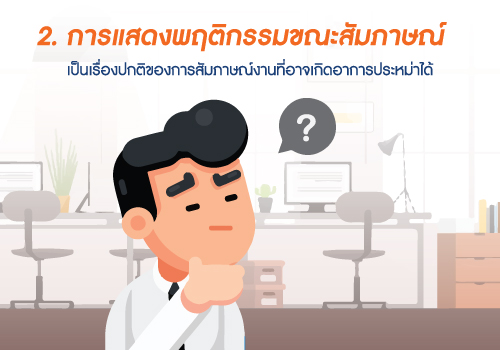
It is natural to feel nervous or excited during a job interview. Before the interview starts, take the opportunity to compose yourself and stay calm.
You should also pay attention to your behavior and manners during the interview. For example, remember to silence your mobile phone and avoid actions such as shaking your legs, frequently touching your face or hair, biting or picking your nails, or avoiding eye contact while answering questions. These behaviors may create a negative impression and can be seen as signs of a lack of confidence.
Keep in mind your choice of words, always use polite language, and remember to end your responses with “krub” or “ka” when answering questions.

3. Bringing Up Salary Too Early
In most companies, salary is usually discussed toward the end of the interview, and the interviewer may present a salary offer for your consideration at that time. Therefore, you should avoid bringing up the topic of salary first. Instead, focus on showing the company that you have the potential and qualifications for the role. You can also research the typical salary range for the position you are applying for in advance to prepare for the discussion when it comes up.

4. Speaking Negatively About Your Previous Employer
Everyone has different reasons for leaving their previous job. However, no matter how dissatisfied you may feel about your former employer, it is best not to share those negative experiences with the interviewer. Otherwise, you may appear to have a negative attitude toward your previous employer and a tendency to view situations negatively. The company may also think that when you leave in the future, you could speak negatively about the company or its employees as well.

5. Unable to Describe Your Strengths and Weaknesses
One of the most common interview questions is asking you to describe your strengths and weaknesses. This question is designed to understand how well you know yourself, whether you can identify your own weaknesses, and how you improve and develop yourself. You should not talk only about your strengths.
If you are interested in joining CP ALL but have not applied yet, visit job.cpall.co.th to explore our current career opportunities.